Adele's fatal climbing accident
The HummingbirdAdele's fatal climbing accident is the abrupt, unintended death of Adele Carrera in the Apuan Alps, where the rope she depended on while climbing broke against the rock. Marco learns of her death from Dr. Carradori eight days after it happened. The loss is devastating not only because Adele is his daughter, but because the broken rope recalls the thread that had defined so much of her childhood: something Marco had spent years protecting from tangling and rupture. The accident makes that cherished image painfully literal, transforming a symbol of connection into the instrument of an irreversible separation.
Circumstances and Discovery
The accident is described as one of the climbing mishaps that, in the eyes of climbers, should not happen. Adele was climbing in the Apuan Alps when her rope broke after rubbing against the rock. Marco stresses the contradiction between the rope’s intended strength and its failure: it was made of polyester and had a high-strength inner core, and yet it snapped. His account dwells on that physical detail because the break seems to violate the basic assurance the equipment was meant to provide.
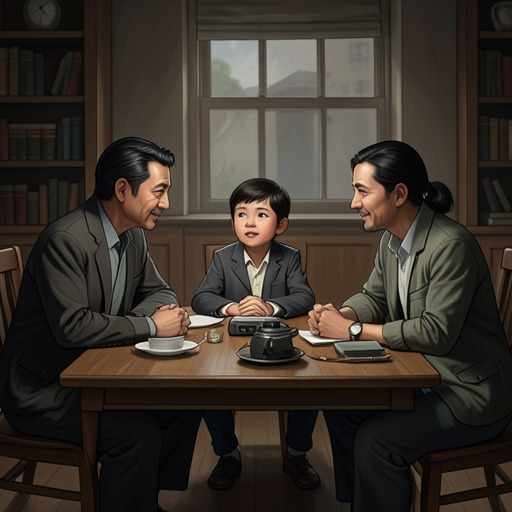
The news reaches Marco in a conversation with Dr. Carradori. When asked about Adele, Marco first confirms that she is dead; after the doctor reacts with shock, he specifies that the accident happened eight days earlier. The delay gives the revelation the shape of a belated disclosure: the death has already occurred, while the listener is only now being brought into its aftermath. The conversation is not an account of the climb itself, but of how its loss is communicated and how Marco is still trying to give it meaning.
The Broken Rope and Adele’s Thread
For Marco, the rope carries a history beyond its practical use in climbing. He recalls spending half of his childhood protecting the thread associated with Adele, taking care that it would neither tangle nor break. The thread is presented as more than an object: it is bound up with Adele’s distinctive way of apprehending the world, and with Marco’s long effort to care for her within that imaginative reality.
The accident brings that history into direct, devastating contact with physical fact. The climbing rope breaks, and Marco immediately connects the failure to the thread. What had once been guarded as an image of continuity now answers, with terrible force, to an actual snapped rope. The correspondence does not make Adele’s death seem inevitable; rather, it sharpens the shock. A device designed to hold and protect fails at the moment its reliability matters most, while the familiar language of the thread returns as a way to register what cannot be repaired.
Consequences for Marco and the Family
In telling Dr. Carradori about the accident, Marco does not keep the discussion confined to its mechanics. He turns to Adele’s mother, his former wife and the doctor’s former patient, saying that he does not know what to do with her. Asked how she is, he answers that she is not well. Adele’s death therefore arrives within a family already facing the consequences of her mother’s distress; Marco’s grief is inseparable from concern about how that loss is affecting her.
The conversation also reveals that Adele had given birth to a daughter two years before the disclosure. Adele never identified the child’s father, and the family does not know who he was. Marco describes the girl as strikingly distinctive, with Japanese features, curly hair, blue eyes, and a mixed appearance that he struggles to explain, then clarifies that his use of the word races is only for convenience. The child’s existence does not undo the death, but it places another generation within the same conversation about loss and care: Marco has lost his daughter, while the daughter she left behind remains part of the family’s present.
Narrative Significance
The accident is presented through aftermath rather than action. Its decisive details—the climb, the rock, the rope’s materials, and its failure—are reported retrospectively in Marco’s conversation with Dr. Carradori. The narrative consequently makes the breaking rope do two kinds of work at once: it explains the physical cause of Adele’s death and reactivates the childhood image through which Marco has understood his daughter. The reader encounters the tragedy as a fact already eight days old, but as an injury that is still being spoken into comprehension.
The rope’s failure also resists a comforting division between meaningful symbols and indifferent events. Adele’s thread had belonged to a highly personal imaginative world, while the climbing rope is ordinary safety equipment; after the accident, Marco cannot keep the two meanings apart. Their convergence gives the loss its particular form without reducing it to fate or claiming that the thread caused what happened. The accident is at once brutally material—a rope rubbing against rock until it snaps—and emotionally charged by the life of meaning that Adele and Marco had attached to the idea of a thread.
For Marco, the lasting consequence is a double rupture: Adele is gone, and the object that had seemed to embody continuity has become evidence of how fragile protection can be. His account returns to the childhood he spent guarding that thread, then ends with the unfinished force of the break and the loss it evokes. In this way the accident becomes not merely the cause of Adele’s death but the moment when a private family image is recast by grief, and when Marco must face the daughter’s absence alongside the continuing needs of her mother and child.